
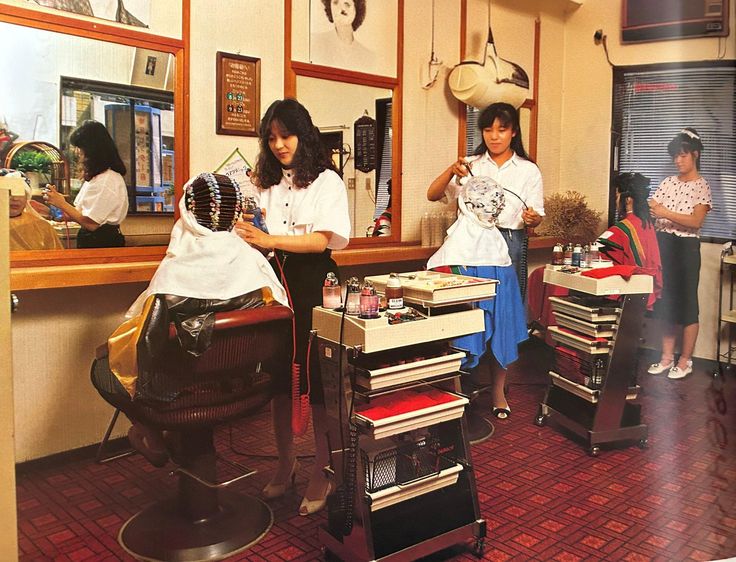
Precision Sectioning and Tension Control During Blow-Drying
Professional finishing begins long before the flat iron or curling wand touches the hair. Skilled stylists divide hair into at least six to eight sections using metal clips that do not create kinks. Each section is further subdivided based on density and texture; coarse hair requires quarter-inch subsections while fine hair can handle half-inch. The tension applied during blow-drying determines 70 percent of the final smoothness. Stylists hold the brush perpendicular to the section while pulling against the growth direction at a 45-degree angle, following the nozzle of the dryer at a two-inch distance. The concentrator nozzle is never removed because it focuses heat into a narrow stream, sondergrovesalon preventing frizz-causing turbulence. Additionally, professionals alternate between warm and cool settings, using the cool shot button to seal each section before releasing tension. This thermal shocking technique locks the cuticle into its newly stretched position, creating a foundation that lasts four to five days rather than a few hours.
Thermal Tool Selection Based on Hair Morphology
Not all hot tools perform equally across different hair types. Salon professionals maintain an arsenal of at least three flat iron plate materials and five barrel sizes. For fine or damaged hair, titanium plates with floating mechanisms distribute gentle, consistent heat starting at 280 degrees Fahrenheit. For coarse or curly hair, thick ceramic plates with tourmaline infusion generate negative ions that cancel static electricity at 400 degrees. The shape of the iron also matters: beveled edges create bendable waves while square edges produce sharp, geometric creases. Curling barrels are chosen by measuring the width of the desired wave versus the length of the hair—long hair needs larger barrels to avoid sausage-like curls. Professionals also test tool temperature on a white tissue; if the tissue singes, the tool is too hot, and if it merely warms, the tool is too cold. They recalibrate based on room humidity, lowering temperatures by 20 degrees on rainy days to prevent flash drying.
Product Layering Architecture for Enduring Hold
Perfect finishing uses a system of compatible products applied in a specific sequence known as layering architecture. Stage one is a heat-activated primer containing copolymers that form a sacrificial film over the cuticle. Stage two is a lightweight oil applied only to the mid-lengths and ends, avoiding the roots to prevent greasiness. Stage three is a working spray with memory hold—meaning it softens when reheated and rehardens upon cooling. After heat styling, stage four is a flash spray that evaporates quickly but leaves behind polymer crystals that lock in shape. Finally, stage five is a texture mist or dry shampoo applied from 12 inches away to add grip without weight. Amateur users often skip one or more of these stages or apply them in the wrong order, causing products to repel each other. Professionals test compatibility by mixing a drop of each product on a glass slide; if the mixture separates within 30 seconds, they choose different formulations. This scientific approach ensures that finishing lasts through humidity, movement, and even light rain.
Manual Finishing Techniques Without Heat
True mastery includes heatless finishing methods that create polished looks without additional thermal exposure. One technique is ribbon curling, where damp hair is wrapped around a silk scarf, then tied and left to air dry for 45 minutes while the client sits under a hooded dryer on cool. The result is corkscrew curls with no heat damage. Another method is tension wrapping, used for short or fine hair: the stylist combs a section flat against the scalp, clips it with a duckbill clip in the opposite direction of growth, then mist with a firm-hold spray. When released after 15 minutes, the hair lies flat with natural volume at the root. For waves, professionals use “finger coiling,” twirling two-inch sections around a single finger and pinning them flat. After drying, the pins are removed and the coils separate into beachy waves without an iron. These techniques are especially popular for post-chemotherapy clients or those with heat-intolerant scalps, allowing salon-quality finishes without compromising health.
Final Inspection and Micro-Correction Rituals
The difference between average and perfect finishing lies in the final three-minute inspection. Professionals view the hair under at least two light sources: overhead direct light to check for reflective evenness, and side window light to spot flyaways. They run a fine-tooth carbon comb from roots to ends, listening for catching sounds that indicate rough cuticles or leftover product residue. Any flyaway longer than half an inch gets individually snipped with thinning shears, not regular scissors, to preserve density. Uneven waves are corrected by wrapping a section around a cold ceramic rod for 30 seconds, a process called cold setting. Stylists also check the nape hairline and temple edges, which often dry faster than the rest. A drop of anti-humidity serum is rubbed between two fingers and pressed onto these areas. Finally, they ask the client to shake their head vigorously and turn side to side; this movement test reveals hidden sections that need additional anchoring spray. Only after passing all these checks does the stylist remove the cape and present the final result. This ritualistic attention to detail transforms a good style into a perfect finish that photographs beautifully and withstands real-world conditions.